



Is a New Wood Deck Worth the Money When You Sell Your Home?
Home Improvement Payback Guide, part 8 of 21
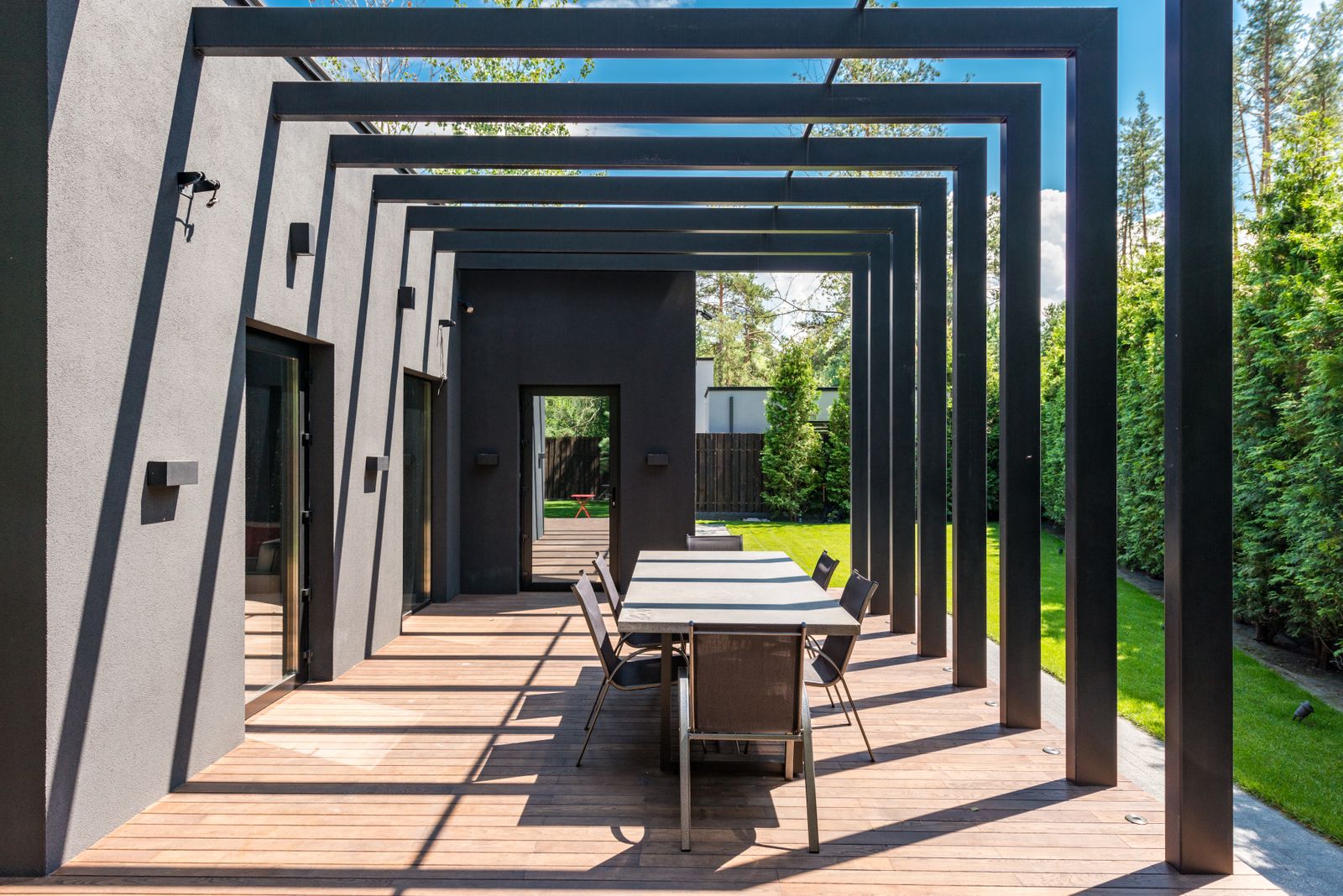
Illustrative photo, not a Bay Area property. Photo from Pexels.
A backyard deck is one of those projects that feels like a sure thing. You picture summer dinners outside, and you tell yourself the deck will pay for itself when you sell. But does a wood deck really put money back in your pocket at closing, or does it mostly buy you a nicer backyard?
Here is the short answer. In the 2021 national Cost vs. Value study, a wood deck ranked number 8 of the 20 projects this guide covers. On average, sellers saw about 66 cents back for every dollar they spent. That is a solid showing, but it is an average from a study, not a quote for your house.
Prefer to watch? I walk through it on video in about six and a half minutes, including the listing photo you can make without buying any lumber.

The job cost
$16,766
Back at resale
$11,038
The gap you absorb
$5,728
Cents back per dollar
66 cents
Numbers above are 2021 national averages from the Cost vs. Value study. They are a ranking guide, not a quote for your home.
What you spend, and what comes back at resale
The study prices one very specific deck.
Before you compare bids, know exactly what the numbers cover. The study priced one specific project, not a custom showpiece.
- A 16 by 20 foot deck on concrete piers
- Pressure treated joists and pressure treated decking
- A built in bench and planter
- Stairs, assuming three steps to the yard, and a full wood railing
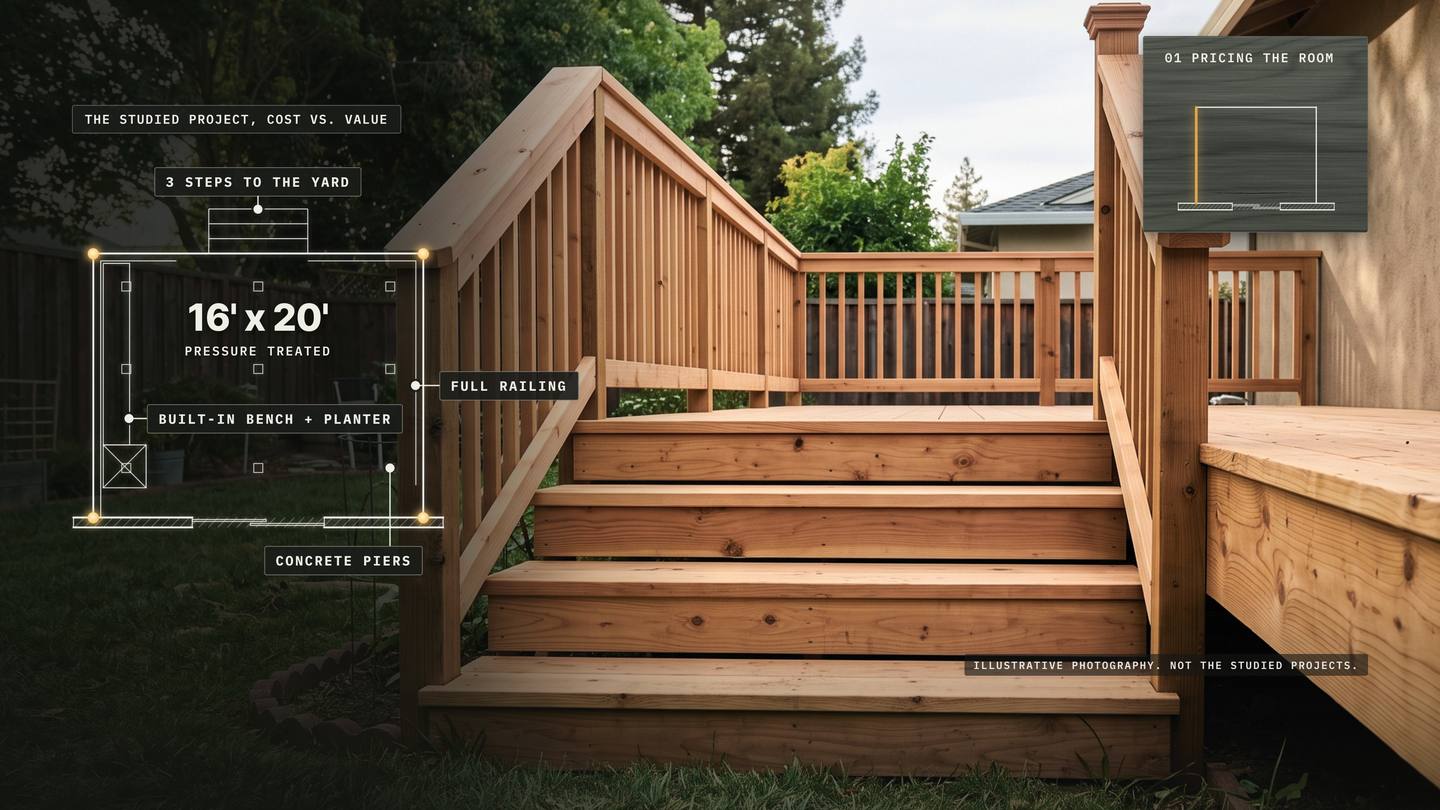
A frame from my video: the project the report priced, 16 by 20 feet of pressure treated lumber on concrete piers, with a built in bench and planter, three steps to the yard and a full railing. The scene is an AI illustration generated with Google Gemini and the card is drawn in code. Neither shows a real home or project.
That is about 320 square feet of outdoor living space, but on a typical appraisal a deck is a feature, not living area. If your plans call for outdoor lighting, a second level, or premium lumber, your cost goes up, but the resale numbers below do not move with it.
The 2021 numbers made a decent case for wood.
In the 2021 national Cost vs. Value study, this wood deck cost $16,766 to build and returned $11,038 at resale. The gap, the part that stayed out of the owner's pocket, was $5,728. Put another way, sellers saw about 66 cents back for every dollar they spent. Keep in mind those are national prices, and Bay Area quotes usually run higher.
The same 2021 national Cost vs. Value study also ran wood head to head with composite decking. Wood cost less ($16,766 vs $22,426) and returned a higher share (65.8 percent vs 63.2 percent). Nationally, the cheaper option won. Not every metro agrees: in the 2021 San Francisco metro data composite led, 87.4 percent to 65.0, so call it a lean, not a law.
The 2025 San Francisco metro numbers look even stronger.
The 2025 Cost vs. Value report covers the San Francisco metro area, which includes Fremont, Newark and Union City. It prices the same wood deck at $20,059, with $18,425 coming back at resale. That works out to about 92 cents back for every dollar spent, leaving a gap of only $1,634. One caution before you get excited: the report changed how it measures between 2021 and 2025, so the two years cannot be compared to each other. The resale figures also come partly from surveys of real estate professionals, so they are informed estimates for a whole metro, not the sale price of any one house. Treat the 2025 figures as their own snapshot, not as a trend line from 2021.
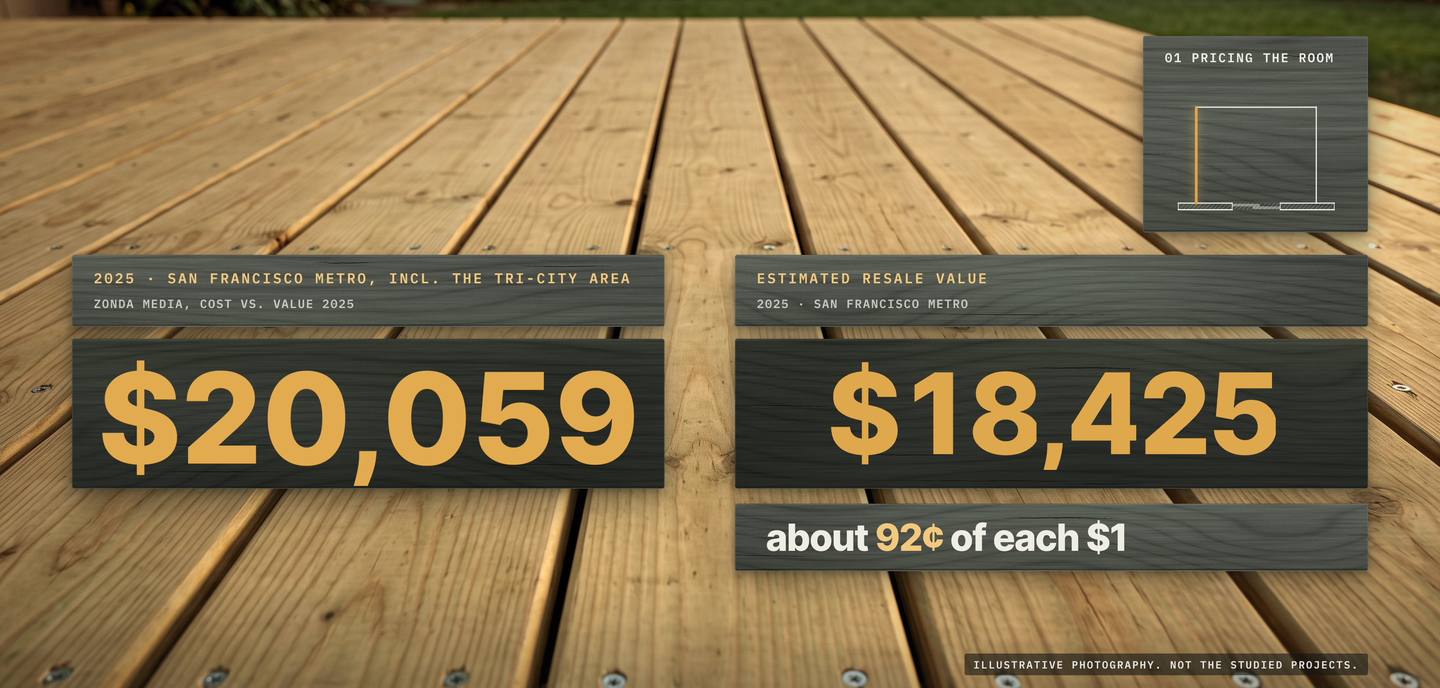
A frame from my video, 2025 San Francisco metro averages: 20,059 dollars for the job and 18,425 dollars in estimated resale value, about 92 cents of each dollar. Metro averages, never a forecast for one yard. The scene is an AI illustration generated with Google Gemini and the card is drawn in code. Neither shows a real home or project.
Plan on a permit, and get one board right.
At 16 by 20 feet, the studied deck is past what California's residential code lets skip a permit: 200 square feet or less, no more than 30 inches above grade, freestanding and not serving the exit door, and only where a city adopts that exemption. Cities can be stricter. Fremont's current amendments have no deck exemption at all, and San Jose also covers repairs and replacements. In most California sales, the seller disclosure form asks whether you know of work done without necessary permits, so an unpermitted deck becomes a question you answer when you sell.
If the deck attaches to the house, the ledger is the board to get right: the one bolted to the wall, holding up one side of the floor. Engineers who study reported deck collapses point to ledgers held on with nails as the most common failure, and California's code spells out bolts or lag screws, flashing and a lateral connection back to the house.
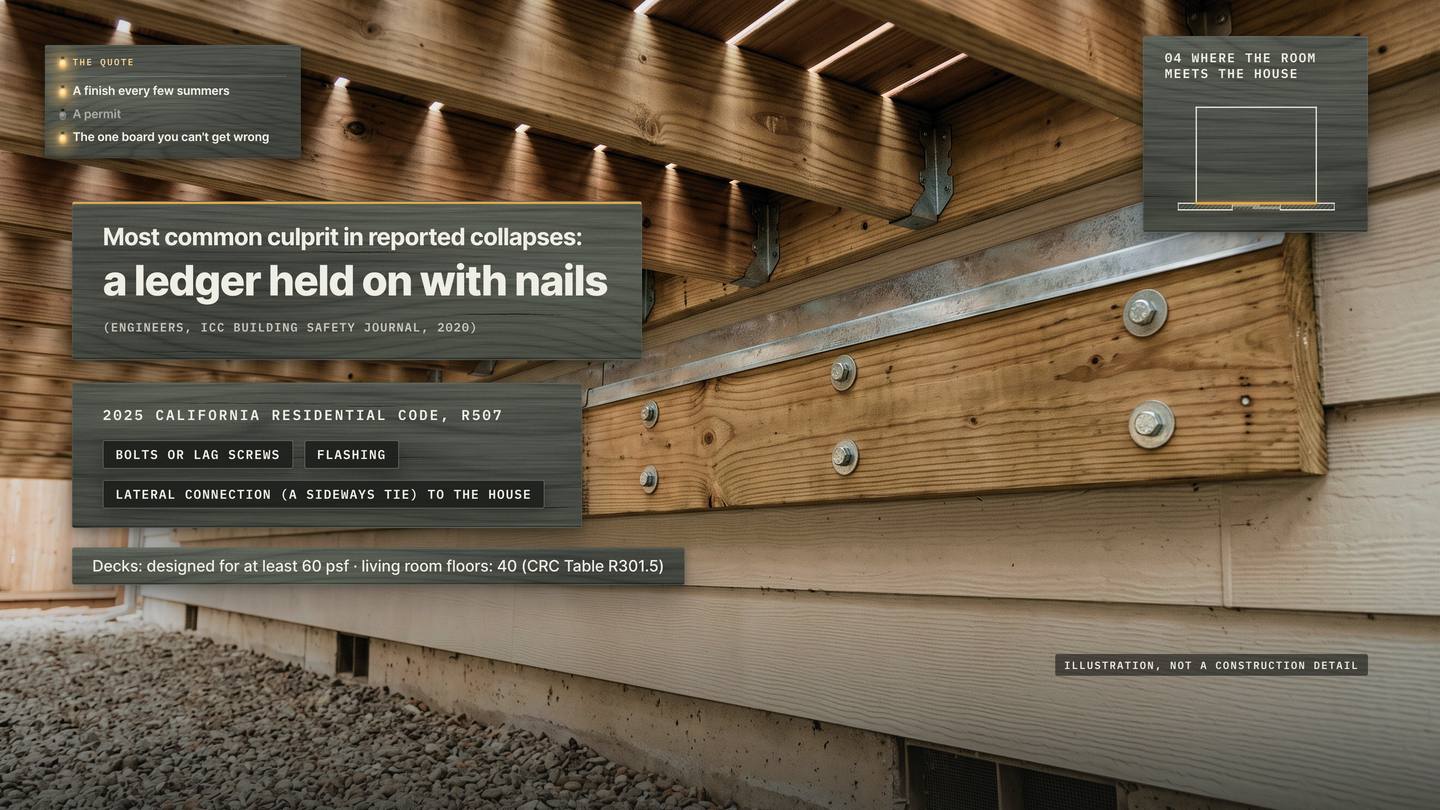
A frame from my video, an illustration and not a construction detail: engineers say the most common culprit in reported collapses is a ledger held on with nails. California's code spells out bolts or lag screws, flashing and a lateral connection. The scene is an AI illustration generated with Google Gemini and the card is drawn in code. Neither shows a real home or project.
In a high or very high fire hazard zone, the decking generally has to meet California's wildfire building rules. Composite is not automatically approved, and the wood industry's listing does not cover ordinary pressure treated pine, so ask your building department before you buy boards.
California has extra deck rules for shared buildings.
California has a deck law worth knowing before you build or sell. If your home is a condo in a building with three or more attached units, SB 326, the state's balcony and deck inspection law, has the association get the elevated wood decks and balconies it maintains, more than six feet up, inspected at least every nine years. A related law, SB 721, covers apartment buildings with three or more units. A detached home, or a townhouse on its own lot in a planned development, falls under neither law. If you own in a shared building in Fremont, Union City, or anywhere in the Bay Area, check whether the association's inspection is current. Do that before you add a deck or market one as a selling point. Since January 1, 2026, a condo seller also has to give the buyer a copy of the most recent report.
Selling soon? Build the photo, not the deck.
Outdoor projects get noticed, because buyers see them the moment they step into the yard. But a new deck is a slow way to get that moment. Permits, contractor schedules, and dry weather windows mean a deck is rarely a last minute project, so if you do build, start the conversation a few months before you plan to list.
If a sale is close, your backyard's first showing is a photo. Set the patio you have like a room: a table for four, an outdoor rug, string lights. Shoot from inside, a few steps back, with the sliding door open all the way, near sunset. Use real furniture, not digital staging.
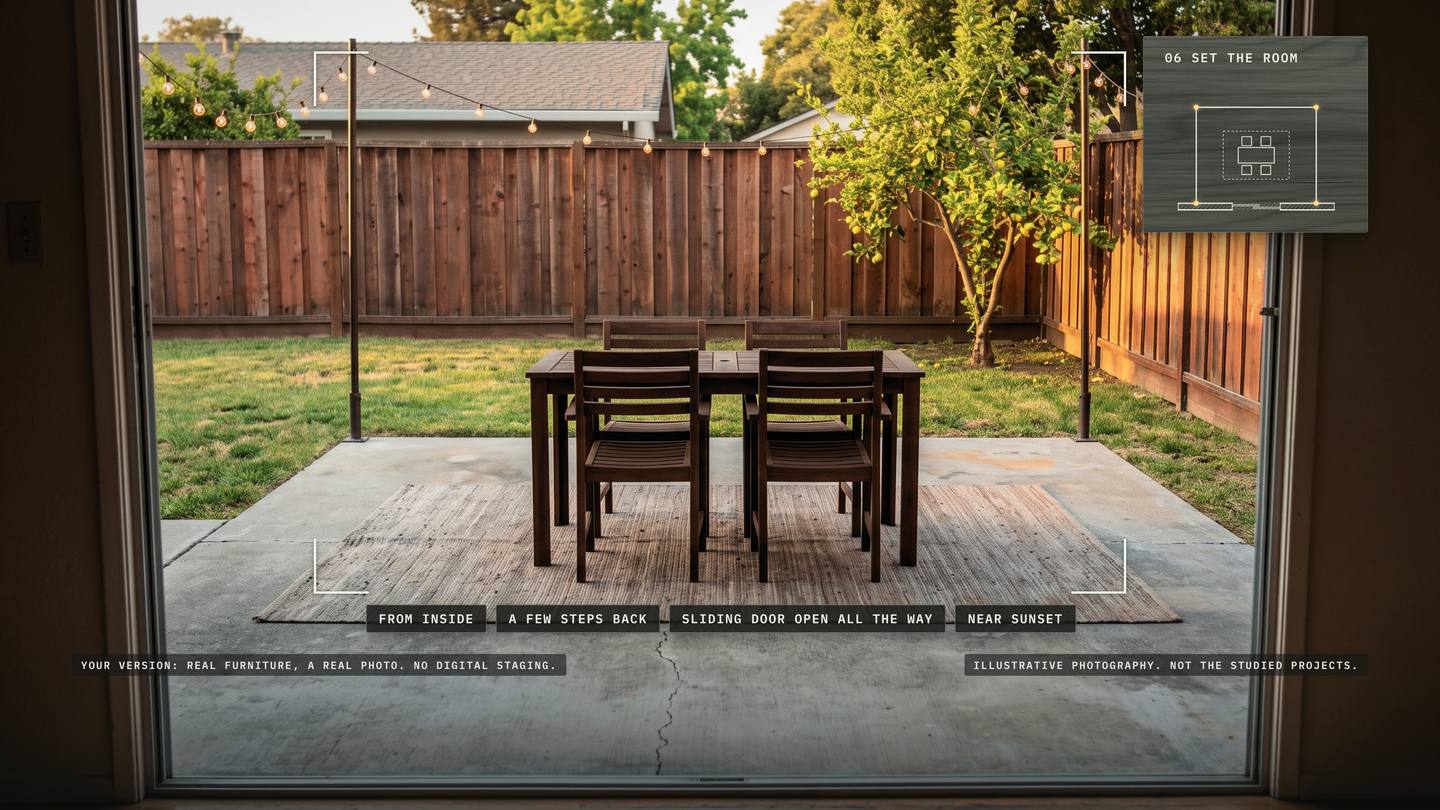
A frame from my video, an illustration: a patio set like a room with a table for four, an outdoor rug and string lights, shot from inside, a few steps back, with the sliding door open all the way near sunset. For your version, use real furniture and a real photo, with no digital staging. The scene is an AI illustration generated with Google Gemini and the card is drawn in code. Neither shows a real home or project.
And skip the project entirely if your yard already has a usable deck or patio in decent shape. In that case a good cleaning, a few repairs, and a fresh coat of stain will likely do more for your sale than new construction. It also costs a fraction of what new construction would. Look underneath first: if the ledger is nailed on, call a contractor before a buyer's inspector spots it.
Questions homeowners ask
Does a wood deck add value when I sell my house?
On average, yes, but not dollar for dollar. In the 2021 national Cost vs. Value study, a wood deck cost $16,766 and returned $11,038 at resale, about 66 cents back for every dollar spent. Those are national averages, and Bay Area construction quotes usually run higher, so treat them as a guide rather than a quote for your home.
Is a wood deck or a composite deck better for resale?
In the 2021 national Cost vs. Value study, wood won the head to head. Wood cost less ($16,766 vs $22,426) and returned a higher share of its cost (65.8 percent vs 63.2 percent). Those are national figures, and Bay Area quotes usually run higher. Not every metro agrees: in the 2021 San Francisco metro data composite led, 87.4 percent to 65.0. Composite needs less upkeep, so the right choice also depends on how long you plan to stay before selling.
How much does a new deck cost in the Bay Area?
The 2025 Cost vs. Value report for the San Francisco metro area, which covers Fremont, Newark and Union City, puts the average wood deck at $20,059. The report shows $18,425 returned at resale, about 92 cents back for every dollar spent. Keep in mind the report changed how it measures between 2021 and 2025, so those figures cannot be compared with the 2021 study. Your own bids will depend on your lot, your city's permit rules, and the size of the deck.
More from this guide
- Every guide in one place: the Home Improvements page
- Start here: all twenty projects, ranked
- Part 7: Wood Windows or Vinyl? What Bay Area Sellers Should Weigh First
- Part 9: A Steel Entry Door Costs Little. Here Is What It Returns at Resale.
- Part 10: Composite Deck or Wood Deck? The Resale Math for Bay Area Homes
See the full charts and payback calculator →
Thinking about selling in the next year or two?
The remodel conversation belongs 6 to 12 months before you list, while every option is still open. Start with what your home is worth today, then decide what, if anything, is worth doing.
Or just ask. Call or text Harv at 510 600 3425.
Cost and resale figures are from the Cost vs. Value Report, © Zonda Media, LLC (2021 national edition and 2025 San Francisco metro edition, costvsvalue.com), deemed reliable but not guaranteed. They are averages for the specific projects studied and are not an estimate or a prediction for any specific property. The 2021 and 2025 editions measure differently and are not comparable to each other. Prepared by Harv Balu, REALTOR®, GRI, CIPS, PSA, FTBS. REALTY EXPERTS®, DRE #02195792. Call or text 510 600 3425. Equal Housing Opportunity.