



A Primary Suite Addition Leaves the Biggest Money Gap of All
Home Improvement Payback Guide, part 18 of 21
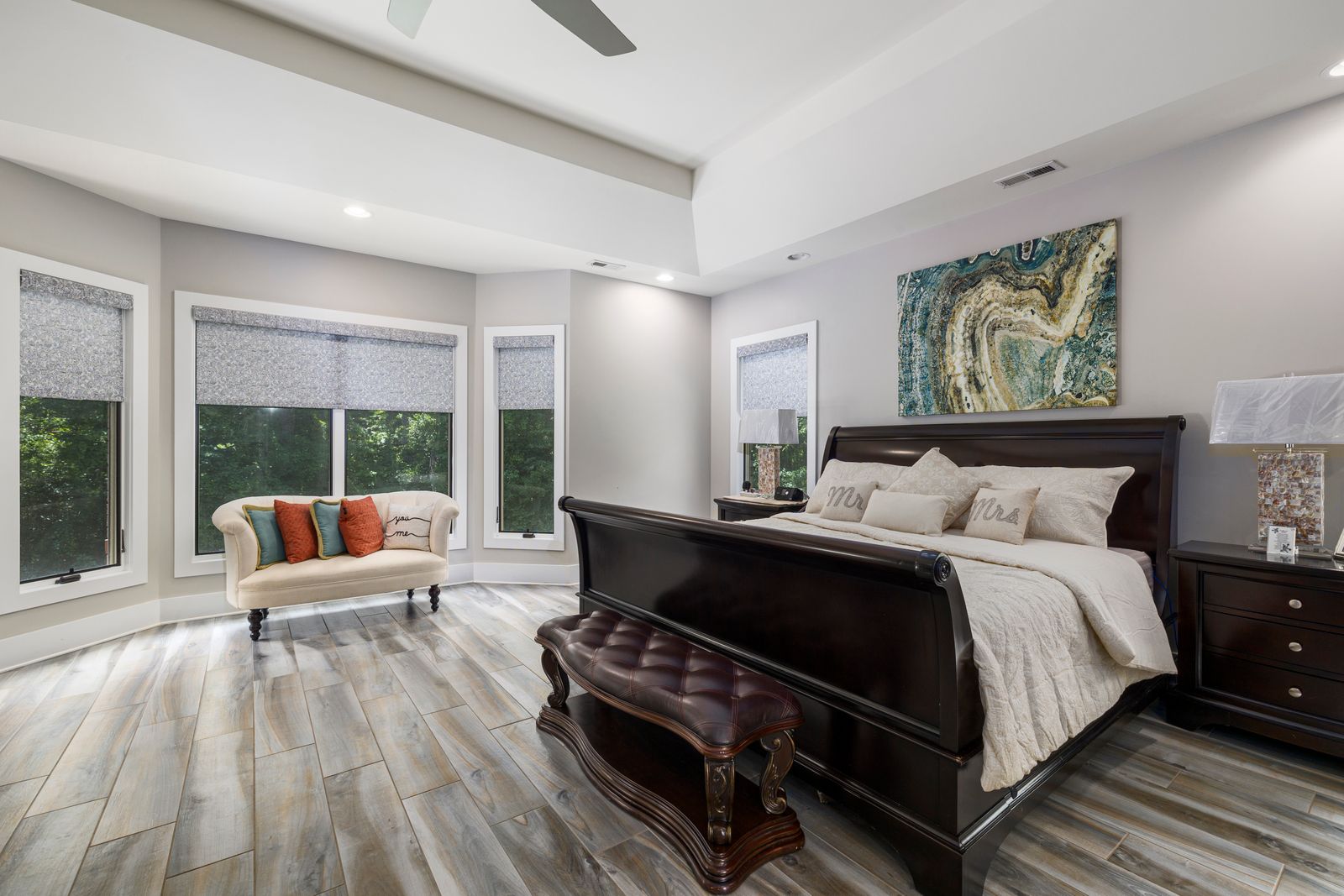
Illustrative photo, not a Bay Area property. Photo from Pexels.
A bigger bedroom. A walk in closet. A tub you can actually soak in. If your home feels tight, a primary suite addition sounds like the fix. But before you call a contractor, it is fair to ask what that new space will be worth on the day you sell.
Here is the short answer. A primary suite addition is one of the weakest projects for payback. In the 2021 national Cost vs. Value study, it ranked number 18 of the 20 projects this guide covers. You may love the new space, but do not count on the sale price to cover it.
The job cost
$156,741
Back at resale
$85,672
The gap you absorb
$71,069
Cents back per dollar
55 cents
Numbers above are 2021 national averages from the Cost vs. Value study. They are a ranking guide, not a quote for your home.
What you spend, and what comes back at resale
The study prices one very specific suite addition.
The numbers below price one exact project, not your dream board. The study calls it a midrange primary suite addition. That means building a brand new 24 by 16 foot primary bedroom suite over a crawlspace. Here is what the package includes.
- A walk in closet with a dressing area
- A freestanding soaker tub
- A separate tiled shower
- A double bowl vanity
Even in 2021, the math looked thin.
The 2021 national Cost vs. Value study, the same study a real estate training course was built on, put the average job at $156,741. At resale, sellers got back an average of $85,672. That left a gap of $71,069, or about 55 cents back for every dollar spent.
Keep in mind those are national averages from 2021. Bay Area quotes usually run higher than national numbers, so do not read that job cost as a local price.
The 2025 local numbers are much tougher.
The 2025 Cost vs. Value report for the San Francisco metro area, the metro that includes Fremont, Newark and Union City, prices this addition at $207,096. It shows about $53,396 coming back at resale, which leaves a gap of $153,700 and works out to about 26 cents back for every dollar you spend. One caution before you compare years. The report changed how it measures results between 2021 and 2025, so the 2021 numbers and the 2025 numbers cannot be compared with each other.
The wait may cost you more than the money.
Here is the part the brochures skip. This project carries the single largest money gap in this guide. It is also the slowest project on the list. Adding square footage means design work, permits, and construction, and in Bay Area cities that can easily run a year from start to finish.
So before any plans are drawn, run one more comparison. Ask what the same budget could do as a down payment on your next house. Sometimes the addition wins. Sometimes moving wins. That is a conversation worth having early, not after the drawings are paid for.
Add space for your life, not your sale.
There is a simple rule for timing these projects. Outside projects, like fresh siding or a new garage door, tend to earn their keep when you sell soon. Inside projects, like this one, are for the years you live there. A primary suite addition sits at the far end of that scale. It costs a lot, the study averages show only a small part coming back at sale time, and it can take a year to plan, permit, and build.
If you plan to stay for many years, the daily comfort may be worth every penny to you. If a sale is on the horizon soon, skip it, and let the next owner build their own dream suite.
Questions homeowners ask
How much does a primary suite addition cost in the Bay Area?
The 2025 Cost vs. Value report for the San Francisco metro area prices a midrange primary suite addition at $207,096. That is an average for the whole metro, so your own bids can land higher or lower. Also note the report changed how it measures results between 2021 and 2025, so its numbers cannot be compared with older editions.
Does a primary suite addition increase resale value?
It adds some value, but on average far less than it costs. The 2025 Cost vs. Value report for the San Francisco metro area shows about $53,396 coming back at resale on a $207,096 job, roughly 26 cents for every dollar spent. The report changed how it measures results between 2021 and 2025, so the two years cannot be compared. These are study averages, not a quote for your house.
Should I add a primary suite or just move to a bigger house?
In the Bay Area, that question deserves real thought before plans are drawn. An addition can easily take a year once you add design, permits, and construction, and this project carries the single largest money gap in this guide. Compare the addition budget against what the same money could do as a down payment on the next house, then decide.
More from this guide
- Every guide in one place: the Home Improvements page
- Start here: all twenty projects, ranked
- Part 17: An Upscale Bathroom Remodel Is a Luxury, Not an Investment
- Part 19: An Upscale Kitchen Remodel and the Money You Will Not See Again
- Part 20: Adding a Bathroom Ranks Last for Payback. When It Still Makes Sense.
See the full charts and payback calculator →
Thinking about selling in the next year or two?
The remodel conversation belongs 6 to 12 months before you list, while every option is still open. Start with what your home is worth today, then decide what, if anything, is worth doing.
Or just ask. Call or text Harv at 510 600 3425.
Cost and resale figures are from the Cost vs. Value Report, © Zonda Media, LLC (2021 national edition and 2025 San Francisco metro edition, costvsvalue.com), deemed reliable but not guaranteed. They are averages for the specific projects studied and are not an estimate or a prediction for any specific property. The 2021 and 2025 editions measure differently and are not comparable to each other. Prepared by Harv Balu, REALTOR®, GRI, CIPS, PSA, FTBS. REALTY EXPERTS®, DRE #02195792. Call or text 510 600 3425. Equal Housing Opportunity.